How does chemiluminescence detection improve sensitivity in medical diagnostics?
How does chemiluminescence detection improve sensitivity in medical diagnostics?
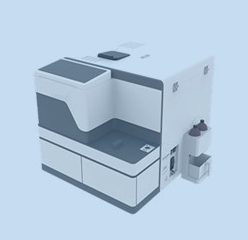
Chemiluminescence analysers are sensitive instruments that detect trace substances by measuring light emitted during chemical reactions. They are widely used in medical diagnostics, such as measuring nasal nitric oxide (F n NO) for asthma assessment, and environmental monitoring, including detection of isoprene and sulfur compounds. These devices offer compact, cost-effective, and highly accurate real-sample analysis. The technology relies on reactions like the luminol-based oxidation to generate measurable light signals, enabling low-level detection without external light sources. Their high sensitivity and specificity make them ideal for clinical, industrial, and research applications.
How does chemiluminescence detection improve sensitivity in medical diagnostics?
Chemiluminescence detection improves sensitivity in medical diagnostics through several interrelated mechanisms:
- Light generation without external excitation: In chemiluminescent reactions, the light is produced directly by the chemical reaction (e.g., luminol or acridinium esters) rather than by an external light source. This eliminates background light from excitation sources, reducing noise and improving the signal-to-noise ratio (SNR).
- Low background signal: Biological samples often emit autofluorescence when illuminated, which adds background noise. Since chemiluminescence does not rely on external illumination, autofluorescence is minimized, leading to lower background and higher detectable signal.
- High signal amplification: Many chemiluminescent assays use enzymes (like horseradish peroxidase, HRP) or catalyzed reactions that generate a large amount of light from a single binding event or catalytic turnover. This amplification translates a small amount of target into a relatively strong light signal.
- Wide dynamic range: Chemiluminescent assays often exhibit a broad dynamic range, meaning they can accurately quantify very low to relatively high concentrations without frequent re-optimization. This is particularly important for detecting trace biomarkers in early disease stages.
- Low detection limit: The combination of low background and high signal amplification enables detection limits in the femtogram to picogram range for certain substrates and assays, allowing identification of scarce biomarkers.
- Fast response and real-time potential: Some chemiluminescent reactions produce light rapidly after the substrate is added, enabling quick readouts and timely clinical decision-making.
- Compatibility with solid-phase assays: Chemiluminescence pairs well with immunoassays (e.g., ELISA, Western blot) and nucleic acid detection (e.g., chemiluminescent in situ hybridization). Enzyme-labeled antibodies produce light proportional to the amount of analyte, enabling sensitive quantification.
- Automation and imaging compatibility: Modern chemiluminescent platforms integrate with high-sensitivity cameras and detectors, enabling automated, high-throughput screening with excellent sensitivity.
Key factors that influence sensitivity:
- Choice of chemiluminescent substrate: Substrates with high light yield and stability yield stronger signals.
- Enzyme efficiency and turnover: Enzyme selection and reaction conditions affect the magnitude and duration of emission.
- Detector performance: Highly sensitive photomultiplier tubes (PMTs) or cooled CCD cameras reduce readout noise.
- Assay design: Proper blocking, washing, and calibration reduce non-specific signals and improve true signal detection.
- Signal duration: Some chemiluminescent reactions are ‘flash’ (brief pulse) while others are ‘glow’ (longer-lasting). Prolonged emission can improve integration and measurement accuracy.
In summary, chemiluminescence detection boosts diagnostic sensitivity by producing light only where the target is present, enabling minimal background noise, strong signal amplification, and compatibility with sensitive detectors and high-throughput workflows. If you’d like, I can tailor this explanation to a specific diagnostic application (e.g., infectious disease serology, cancer biomarker panels, or nasal nitric oxide testing) and include example assay workflows.
Chemiluminescence detection improves sensitivity in medical diagnostics through a combination of low background, strong signal generation, and compatibility with sensitive detectors. Here are the main mechanisms and contributing factors:
- Light generation without external excitation
The signal arises from a chemical reaction that emits photons, not from illuminating the sample. This avoids background light from excitation sources and reduces noise, improving the signal-to-noise ratio (SNR). - Low background signal
Biological samples often exhibit autofluorescence under optical excitation. Since chemiluminescence does not require external light, autofluorescence is minimized, leading to a much lower background. - High signal amplification
Many assays use catalysts or enzymes (e.g., horseradish peroxidase, alkaline phosphatase) that trigger amplification reactions. A single target binding event can produce many photons, substantially boosting the detectable signal. - Wide dynamic range
Chemiluminescent assays typically maintain linearity over a broad concentration range, enabling reliable quantification from very low to moderately high analyte levels without frequent re-optimization. - Low detection limits
The combination of low background and strong photon output allows detection limits in the femtogram to picogram range for certain substrates and assay formats, enabling detection of trace biomarkers. - Fast and real-time potential
Some chemiluminescent reactions emit quickly after substrate addition, allowing rapid readouts and timely clinical decisions. Others provide a stable signal that can be integrated over time for improved accuracy. - Compatibility with various assay formats
- Immunoassays (e.g., ELISA, high-sensitivity immunoassays) benefit from enzyme-linked substrates that emit light proportional to antigen amount.
- Nucleic acid assays and imaging techniques also leverage chemiluminescent reporters for sensitive detection.
- Detector and instrumentation considerations
- Highly sensitive detectors (photomultiplier tubes, cooled CCDs) reduce electronic read noise.
- Low dark counts and efficient light collection further improve measurable signal, especially at low analyte concentrations.
- Substrate and reaction optimization
- Substrates with high quantum yield and stability maximize photon output.
- Reaction conditions (pH, temperature, buffers) are optimized to sustain emission and minimize background.
In short, chemiluminescence enhances diagnostic sensitivity by eliminating background excitation, leveraging strong signal amplification, and enabling highly sensitive detectors and robust assay designs. If you want, I can tailor this to a specific application (e.g., infectious disease serology, cancer biomarker panels, or nasal nitric oxide testing) and provide a concise workflow diagram or example readout characteristics.